Why Clean Floors Matter in Busy Warehouses
In a city that ships everything from craft beverages to electronics, warehouse floor scrubbing San Diego isn’t cosmetic—it’s operational insurance. Forklift lanes grind in tire residue and grit; loading docks track in sand and salt from coastal air; spill zones build up slick films that threaten traction and productivity. A smart scrubbing program restores friction, reduces airborne dust, and keeps audits smooth—without shutting down your lines.
What “Good” Looks Like: Program, Not Panic
Define Outcomes Before Methods
Specify the results you need—slip-resistant aisles, dust-free pick modules, clean dock approaches—then match methods. When outcomes are clear, frequencies and chemistry choices follow naturally.
Segment Your Floor by Risk
Not all square footage is equal. Break the facility into: high-speed traffic lanes, static storage, staging, breakrooms, and battery/maintenance areas. Your warehouse floor scrubbing San Diego plan should give each zone the frequency and chemistry it actually needs.
For safety-driven housekeeping guidance that underpins traction and hazard control, see OSHA.
Methods That Work (and When to Use Them)
Daily Auto-Scrubbing for Lanes and Docks
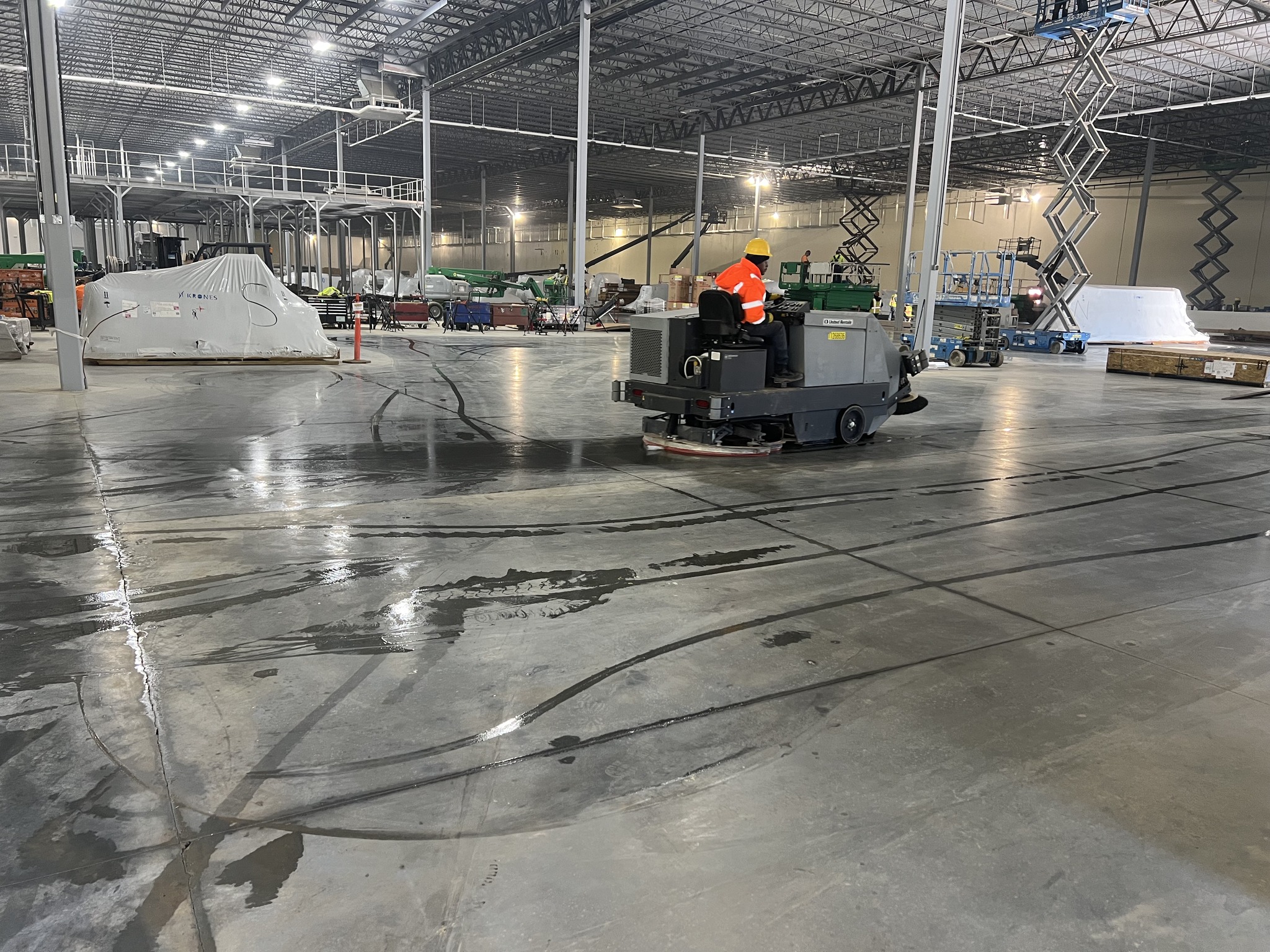
Auto-scrubbers with cylindrical brushes lift grit from joints while recovering solution in one pass. Use squeegee checks and blade rotations to avoid streaks that telegraph “wet” in polished concrete.
Degrease, Then Neutralize
Oil and forklift tire marks need targeted degreasers, but residue can re-soil fast. Follow heavy-degrease cycles with a neutral pH rinse to leave the floor clean, not sticky.
Edge and Joint Detailing
Auto-scrubbers miss 1–2 inches along racking, bollards, and dock levelers. Program weekly detail with handheld tools or small walk-behinds to prevent black edge lines and dust nests.
Dust Control Between Scrubs
HEPA sweepers and microfiber dust mops between machine passes keep particulate from re-depositing. In pick modules, low-noise sweepers protect shift throughput.
San Diego Realities to Build Into Your Scope
Coastal Grit and Salt Film
Ocean air and open doors pull in chloride-laden dust that binds to concrete. Increase frequency at dock aprons and entry lanes and use a fresh-water priming rinse before applying detergent on high-salt days.
Mixed-Use Warehouses
3PLs and multi-tenant buildings see staggered peaks. Schedule high-traffic aisle scrubbing during line changeovers; detail lower-traffic zones on alternate days to avoid bottlenecks.
Spill and Battery Rooms
Battery maintenance splashes and pallet drips are different animals. Use chemistry compatible with your floor finish and install clearly marked spill kits near risk points. Document neutralization and disposal steps in your SOP.
The City Wide Scrubbing Workflow
1) Survey, Soil Profiling, and Pilot
We identify soils (oils, tire plasticizers, dust fines), test a small area, and dial in pad/brush, down-pressure, and dilution so results scale without surprises.
2) Dry Soil Removal
Pre-sweep with HEPA capture. Dry removal can lift the majority of loose debris—critical for better traction and cleaner recovery tanks.
3) Targeted Pre-Treat
We pre-spot tire lanes, oil splashes, and adhesive ghosts; let chemistry dwell long enough to work (no “splash and dash”).
4) Controlled Auto-Scrubbing
- Matched brush/pad to slab texture (polished, densified, or broom-finished).
- Measured solution feed to avoid ponding and long dry times.
- Tight squeegee maintenance for streak-free recovery.
5) Neutral Rinse & Speed-Dry
A neutral pass removes residue that causes rapid re-soiling. Air movers and forced ventilation speed reopen times—especially near dock doors and pedestrian crossings.
6) QA and Documentation
We verify slip-resistance visually (and instrumented when requested), record chemistries, and log corrective actions—so audits and landlord inspections stay simple.
Planning a broader upkeep program? Explore Commercial Cleaning Services.
Frequency Guide That Actually Holds Up
- Forklift fast lanes & docks: Daily to 3× weekly auto-scrub; weekly degrease + neutral rinse.
- Staging & pack lines: 2×–3× weekly; daily dust control between passes.
- Static storage aisles: Weekly scrub; monthly detail along uprights and end-of-rack zones.
- Breakrooms & offices attached to the warehouse: Daily touchpoint cleaning; weekly machine scrub to stop cross-tracking back onto production floors.
Common Pitfalls (and How We Avoid Them)
Residue = Rapid Re-Soiling
Over-strong detergent or skipped rinses leave surfactant films that magnetize dust. We calibrate dilution and finish with a neutral rinse to keep floors cleaner, longer.
Wet Aisles During Peak
Scrubbing at the wrong hour slows lifts and creates hazards. We stage work during changeovers, use fast-recovery settings, and come off micro-zones so traffic keeps moving.
Ignoring Edges and Joints
Soils creep from edges into lanes. We rotate in detail passes and corner tools weekly to keep boundaries crisp.
Why San Diego Facilities Choose City Wide
- Operational sensitivity: We build scrubbing windows around receiving, picking, and carrier schedules—no surprises.
- Finish-safe approach: Right chemistry for polished concrete, epoxy, or sealed slabs; no hazing or dulling.
- Transparent QA: App-based checklists, photo confirmations (no proprietary or employee images), and easy service reports for managers and landlords.
- Scalable crews & equipment: From small walk-behinds for tight modules to rider scrubbers for million-square-foot footprints.
Ready to tighten safety and keep product moving?
📞 Phone: (619) 938-2600
📧 Email: info@citywidecleaningservices.com
We’ll walk your floor, test a lane, and deliver a line-item warehouse floor scrubbing San Diego program that fits your shift times, slab type, and budget.