If you’re pricing “janitorial services vs commercial cleaning San Diego,” the terms can blur. Both keep buildings clean, but they solve different problems on different schedules with different tools. Knowing the distinction helps you scope work correctly, control costs, and protect your brand.
Two Service Models, One Facility Goal
Daily cleanliness and long-term asset care are not identical. Janitorial services focus on day-to-day upkeep that keeps spaces consistently presentable and sanitary. Commercial cleaning targets deeper, project-level tasks that restore surfaces, extend material life, and reset appearance standards.
A Simple Way to Think About It
- Janitorial = Routine, recurring.
- Commercial cleaning = Heavy, periodic.
For a neutral definition of the project-focused side, see commercial cleaning.
What Janitorial Services Cover (Recurring Essentials)
Janitorial scopes are built to match business hours and traffic patterns:
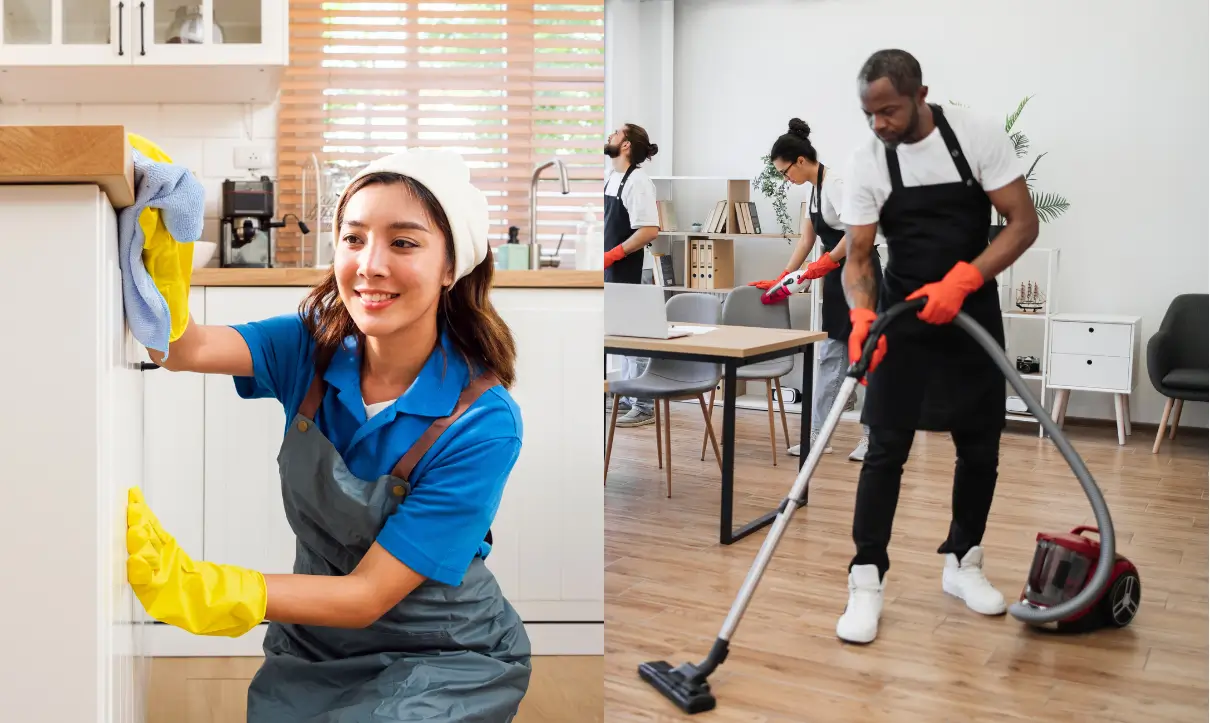
- Daily tasks: trash pulls, dusting, restroom sanitizing, breakroom wipe-downs, vacuuming, hard-floor dust mopping, glass spot cleaning
- Touchpoint disinfection: door handles, elevator buttons, rails, faucets, shared equipment
- Consumables management: soap, sanitizer, towels, and tissue stocked and calibrated
- Day porter options: mid-day resets for high-traffic facilities
When you think janitorial services vs commercial cleaning San Diego, picture janitorial as the steady rhythm that prevents complaints and keeps occupants comfortable.
What Commercial Cleaning Covers (Periodic Deep Work)
Commercial cleaning is scheduled less frequently, with heavier equipment and trained crews:
- Carpet care: hot water extraction, low-moisture encapsulation, spot dyeing
- Floor care: machine scrubbing, finish application, stone polishing, grout restoration
- Detailing: high-dusting, vent cleaning, partition/fixture descaling, full glass washing (interior/exterior)
- Post-event/post-construction resets: debris removal, fine dust control, final detail clean
These services protect asset value and reset presentation quality—crucial when a space has drifted from “like new.”
How to Decide What You Need (San Diego Context)
1) Foot Traffic & Use-Case
Downtown offices and mixed-use properties face unique peaks (lunch rushes, game days, tourism). High traffic calls for recurring janitorial plus periodic commercial cleaning for floors and glass.
2) Surface Materials
- LVT/linoleum needs neutral daily care and periodic machine cleaning.
- Stone requires pH-appropriate products and occasional polishing.
- Commercial carpet benefits from interim encapsulation monthly/quarterly and extraction semi-annually.
3) Risk & Compliance
Healthcare lobbies, food-adjacent spaces, and labs may require specific dwell times, product logs, and operator training—often a blend of enhanced janitorial protocols and periodic commercial sanitation resets.
Sample Bundles That Work
Office Portfolio (Class A/B)
- Janitorial: 5 nights/week + day porter 3–4 hours (restrooms, breakrooms, touchpoints).
- Commercial: quarterly carpet encapsulation, semi-annual extraction, exterior window cleaning 2–3x/year.
Retail & Hospitality
- Janitorial: 7 days/week opening and closing checks; restroom cadence every 60–90 minutes.
- Commercial: monthly hard-floor scrubs, grout restoration each quarter, full glass washes before peak seasons.
Industrial & Warehouse
- Janitorial: debris control, restroom/locker sanitation, break area resets.
- Commercial: scheduled warehouse floor scrubbing and periodic high-dusting for rafters and supply/return vents.
For a related deep-dive topic, see our High-Traffic Area Cleaning guide.
Budgeting: Why Blending the Two Saves Money
A well-calibrated janitorial plan reduces emergency calls and product waste. Periodic commercial cleaning prevents premature replacement of carpet, stone, and resilient floors. Combining both typically lowers the total cost of cleanliness by spacing heavy work at the right intervals while preventing soil load from getting out of hand.
Pro Tip: Specify Frequencies, Not Vague Outcomes
Write scopes with clear cadences (e.g., “weekly machine scrub,” “semi-annual extraction”), product/dwell requirements, and QA checkpoints (ATP or visual scoring). That makes janitorial services vs commercial cleaning San Diego comparisons apples-to-apples.
QA, Training, and Safety You Should Expect
- SOPs & color coding: clean-to-dirty, top-down sequences that prevent cross-contamination.
- Chemical logs & SDS: matched to surfaces and manufacturer guidelines.
- Equipment standards: HEPA filtration, auto-dilution systems, microfiber programs, ladder/boom lift certifications.
- Documentation: time-stamped inspections, corrective action tracking, and transparency on consumables.
When to Rebalance Your Mix
- Complaints up? Increase porter coverage and touchpoint frequency (janitorial).
- Floors look dull? Add periodic scrubs or a finish cycle (commercial).
- Odor returns quickly? Schedule grout/extraction and drain biofilm treatments (commercial), then maintain (janitorial).
- New tenancy or remodel? Start with a commercial reset, then right-size janitorial to the new traffic.
Get a Plan That Fits Your Building
City Wide Cleaning Services can scope, price, and deploy a right-sized blend of recurring janitorial and periodic commercial services—tailored to your hours, surfaces, and budget.
- Call: (619) 938-2600
- Email: info@citywidecleaningservices.com
- Explore janitorial services San Diego for ongoing coverage
Quick FAQ
Is one service “better”?
Neither—both are essential. Janitorial prevents daily issues; commercial cleaning restores and protects.
How often for commercial carpet?
Light soil: encapsulation quarterly, extraction 1–2x/year. Heavy soil: increase both by 1–2 cycles.
Can I start small?
Yes. Launch a janitorial base, then layer commercial resets where appearance gaps or hygiene targets require.