When one dirty microfiber or a mistimed mop pass can move germs from a restroom to a breakroom, good intentions aren’t enough. Businesses need a workplace cross-contamination prevention cleaning program that’s systematic, trackable, and easy for teams to execute at speed. Below is a practical, standards-driven framework that keeps your people safe and your brand confident.
Why Cross-Contamination Prevention Matters Now
Cross-contamination is the unintended transfer of soil, pathogens, chemicals, or allergens from one area, surface, or tool to another. In open offices and multi-tenant buildings, traffic is high and boundaries blur—coffee stations touch finance desks, visitors flow through lobbies, and shared touchpoints multiply. The result: higher absence rates, complaints about odors or cleanliness, and risk of outbreaks that disrupt operations. A resilient strategy uses zoning, tools, chemistry, and verification—working together—to prevent spread rather than react to it.
The 6-Pillar Strategy
1) Zoning & Flow Control
Segment your workplace into risk-based zones—restrooms, breakrooms/kitchens, reception, desks & collaboration, wellness/medical rooms, and waste/utility areas. Design your workplace cross-contamination prevention cleaning routes to move from low-risk to high-risk (e.g., admin areas → kitchens → restrooms), never the reverse.
Practical Zoning Tips
- Post simple route maps on custodial carts.
- Use door tags or QR codes to confirm when a zone was last disinfected.
- Schedule after-hours “reverse flows” only when teams and tools are fully swapped and sanitized.
2) Color-Coding That Everyone Obeys
Color-coding eliminates guesswork. Each color is tied to a zone and task—red for restrooms, yellow for breakrooms, blue for glass/high-touch, green for general office, gray/black for floor care. Color applies to microfiber cloths, mop frames/heads, buckets, sprayers, and brushes.
Make It Bulletproof
- Train on “one cloth, one quadrant”: fold microfiber into fourths, flipping to a clean panel per surface.
- Label cart shelves with color chips.
- Replace any “mystery” tool that’s lost its label—no exceptions.
3) Touchpoint Protocols with Dwell Time
Door handles, elevator buttons, copier panels, chair arms, fridge pulls, faucet levers, railings, and shared keyboards are your cross-contamination superhighways. Use EPA-registered disinfectants matched to target organisms and respect the full dwell time.
- Sequence: Clean (remove visible soil) → Disinfect (apply, keep wet to dwell) → Allow to air-dry when the label requires.
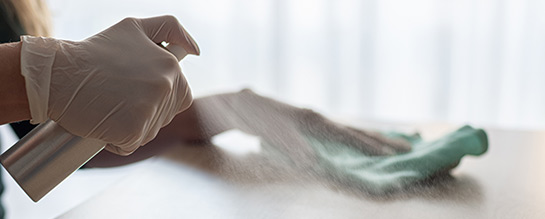
- Technique: Spray onto the cloth for electronics; spray-to-surface only on durable surfaces.
- Verification: Random ATP testing or fluorescence gel checks confirm crews are hitting (and holding) the right spots.
For guidance on cleaning and disinfecting fundamentals, see CDC cleaning and disinfecting guidance.
4) Tool Hygiene: Microfiber, Mops, and Machines
Even the best route can fail if tools carry soils across zones.
Microfiber Care
- The bag used microfiber by color at the cart (no mixed bags).
- Launder at recommended temps; avoid fabric softeners (they kill absorbency).
- Track life cycles; retire clothes once edges curl or pile mats down.
Mop System
- Prefer flat microfiber mops with single-use heads per room/zone.
- Pre-charge mop heads with measured solution—no “dip-back” that contaminates buckets.
- For autoscrubbers, disinfect recovery tanks and squeegees daily.
5) Chemistry & Safety That Fit the Site
Your workplace cross-contamination prevention cleaning plan should standardize a lean chemical set with clear SOPs:
- Neutral cleaners for daily particulate/organic soils in office zones.
- Food-safe degreasers for breakroom soils and microwave/fridge interiors.
- EPA-registered disinfectants for touchpoints and restrooms; align dwell times (1–5 minutes is common) so teams remember them.
- Green certifications (where possible) lower VOCs and improve occupant experience without sacrificing efficacy.
6) Scheduling, Logs, and Communication
Cross-contamination prevention is consistent over heroics.
- Frequencies:
- Restrooms & kitchenettes: multiple touchpoint cycles during the day + nightly deep clean.
- Elevators & lobbies: touchpoints every 2–4 hours during peak traffic.
- Workstations: scheduled rotations with opt-in desk protocols.
- Logs: Digital or laminated checklists at service doors; QR scans push proof-of-service to supervisors.
- Signage: Friendly “This surface was disinfected at :” cues reinforce trust and compliance.
Special Areas That Demand Extra Discipline
Breakrooms & Kitchens
Cross-contamination risks rise with shared food prep. Sanitize handles, coffee stations, refrigerator gaskets, microwave buttons, sink aerators, and ice scoop holders. Use food-contact-safe products where applicable and separate cloths (yellow) from any restroom colors permanently.
Elevators & Stairwells
These circulation hubs blend the entire building’s population. Standardize frequent wipes on call buttons, rails, balustrades, fire doors, and card readers. Use quick-flash disinfectant wipes for short dwell-time between rush periods.
Conference Rooms & Shared Tech
Bundle touchpoint resets into every room turnover: table edges, chair tops, remotes, touch panels, speakerphones, and HDMI dongles. Provide onsite caddies with labeled wipes for self-service between scheduled cleans.
Waste Handling and Hand Hygiene
- Line all cans; tie and remove before cleaning horizontal surfaces to prevent aerosolizing debris.
- Stage hand sanitizer near high-traffic doors and print/copy areas to reduce re-contamination pressure on cleaning teams.
- For sharps or bio-risk areas (on-site clinics, wellness rooms), follow isolation and red-bag protocols with dedicated carts and PPE.
Training, Audits, and Continuous Improvement
- Onboarding: Teach the why behind color coding, zoning, and dwell time.
- Skill checks: Quarterly audits—cloth handling, mop charging, log completion, and ATP pass thresholds.
- Feedback loops: Occupant surveys pinpoint hot spots that need higher frequency or different chemistry.
If you’re building a broader hygiene roadmap, see our guide to Touchpoint Disinfection Protocols to align your daily tasks with surge-level responses during flu season or outbreaks.
Make Cross-Contamination Prevention Your Competitive Advantage
A visibly clean workplace is good; a workplace cross-contamination prevention cleaning program is better. It reduces sick days, boosts tenant satisfaction, and signals that leadership protects both people and productivity. We’ll map your zones, standardize tools and chemistry, set frequencies, and implement verification so your results hold up—shift after shift.
Phone: (619) 938-2600
Email: info@citywidecleaningservices.com