Choosing between electrostatic disinfection vs fogging for offices can feel like splitting hairs—both look high-tech, both disperse disinfectant, and both promise speed. But the way they deliver chemistry to surfaces is very different, and those differences affect coverage, safety, downtime, and cost. Here’s a clear, field-tested breakdown so you can select the right option for your workspace and risk profile.
The Core Difference: How Each Method “Finds” Surfaces
Electrostatic Spraying (ES)
Electrostatic sprayers charge droplets as they exit the nozzle. These charged microdroplets are attracted to surfaces like a magnet, wrapping around chair legs, rails, and the undersides of handles—the tricky places custodial teams struggle to reach uniformly. Result: better, more consistent “wet” coverage on all sides of a surface with less chemical.
Cold Fogging / Misting
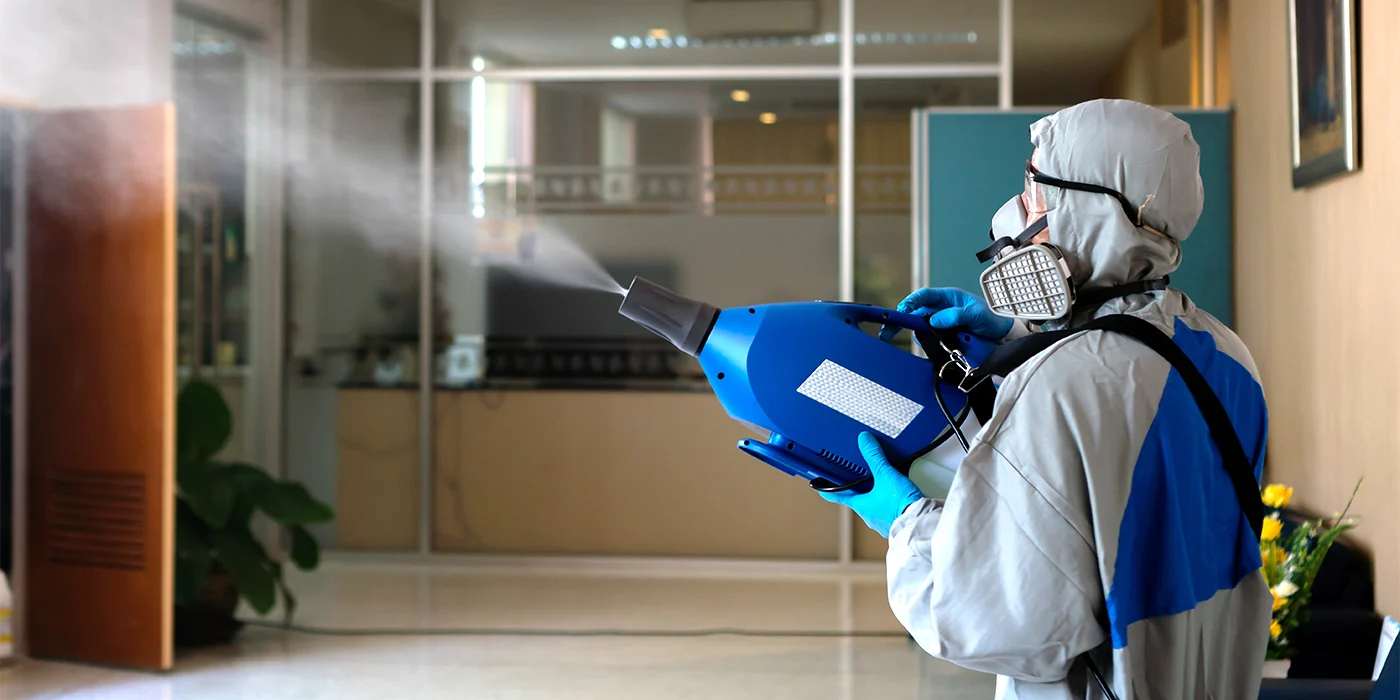
Fogging releases a visible cloud of very fine droplets that passively settle. It’s fast for open volumes, but deposition on verticals, shadowed areas, and the back sides of objects can be uneven. Fogging can be useful for large, uncluttered rooms; it’s less ideal for highly “interrupted” spaces (desks, devices, wires, chair frames).
Where Each Method Excels
Best use cases for Electrostatic
- Offices with many touchpoints (keyboards, phones, desk edges, armrests)
- Mixed materials and angles where wraparound coverage matters
- Targeted, frequent treatment with minimal disruption and chemical use
Best use cases for Fogging
- Large, high-ceiling areas with few obstructions
- After-hours supplemental treatment for air/volume contact (paired with proper surface wiping)
- Situations where a quick “whole-room” pass is needed and deep wraparound is not critical
Coverage, Dwell Time, and Chemistry
Coverage
Electrostatic typically achieves more uniform contact with less product because droplets actively seek surfaces. Fogging relies on gravity and air currents; deposition on hidden sides can be hit-or-miss.
Dwell time
No matter the device, kill claims depend on dwell time—keeping the surface visibly wet for the label-required minutes. ES makes it easier to wet the entire surface area quickly. Fogging may require longer room “set time” to achieve adequate deposits and then additional wait time to meet dwell.
Chemistry choice
Always match an EPA-registered product to your pathogen target and surface material, then follow the label for device compatibility and PPE. For authoritative guidance on sprayers, foggers, and misters, see EPA guidance.
Safety and Re-Entry
- Aerosol control: ES devices produce directed microdroplets; fogging creates a room-filling cloud. With fogging, plan for longer room vacancy and verifying ventilation before reentry.
- Residue risk: Over-fogging can leave residue on electronics and finishes. ES allows targeted applications to avoid overwriting sensitive equipment.
- Human factors: For occupied offices or fast turnovers between meetings, ES usually wins—shorter waiting periods, less air “haze,” and less odor.
Cost and Downtime
- Labor & chemical efficiency: ES often lowers total chemical use due to wraparound efficiency and reduces return trips to “touch missed spots.”
- Speed: Fogging can be rapid for large, open volumes but may require longer reentry delays. ES is generally faster in real-world office layouts with lots of furniture.
- Program fit: If you’re layering nightly cleaning with routine disinfection, ES slots in neatly. If your office hosts occasional high-occupancy events, a one-off fog might make sense—paired with targeted ES or manual touchpoint disinfection.
Compliance, Documentation, and Optics
Stakeholders want proof: which rooms, when, and with what. Both methods should be logged with product name, EPA Reg. No., contact time, and operator details. ES typically photographs well (visible wetting on target surfaces) and reassures teams that touchpoints—not just air—received attention.
Practical Head-to-Head: Office Reality Check
Touchpoints
- Electrostatic: Excellent. Wraps around knobs, rails, arms, switches.
- Fogging: Variable. Better for exposed horizontals than for hidden or vertical surfaces.
Electronics
- Electrostatic: Controlled targeting minimizes risk.
- Fogging: Higher risk of residue if not covered or removed.
Downtime
- Electrostatic: Shorter reentry windows; good for daytime turnovers with zoning.
- Fogging: Longer vacancy needed; plan outside business hours.
Chemical Consumption
- Electrostatic: Typically lower per square foot.
- Fogging: Can be higher to ensure adequate deposition.
Building a Smart Office Protocol
- Clean visible soil first. Disinfection is not a replacement for cleaning.
- Target touchpoints and traffic patterns. ES is ideal here.
- Use fogging sparingly. Reserve for large, open rooms or periodic supplements, and confirm reentry times.
- Verify dwell time. Build it into your schedule; don’t rush re-occupation.
- Document every cycle. Product, dwell, area covered, date/time, and tech signature.
Want to go deeper on tools and local execution? Explore our guide to electrostatic disinfection San Diego.
So… Which Should You Choose?
If you’re deciding between electrostatic disinfection vs fogging for offices, start with your layout and risk tolerance. For complex, desk-heavy spaces where touchpoint reliability is everything, electrostatic is the better everyday choice—fast, targeted, and consistent. Use fogging as a strategic add-on for large, open volumes or special resets when rooms can remain vacant longer.
Make Your Office Safer—Without Slowing Work
We’ll build a disinfection plan that fits your floor plan, ventilation, occupancy, and budget—then document it so you can show the “why” behind every step.
Phone: (619) 938-2600
Email: info@citywidecleaningservices.com