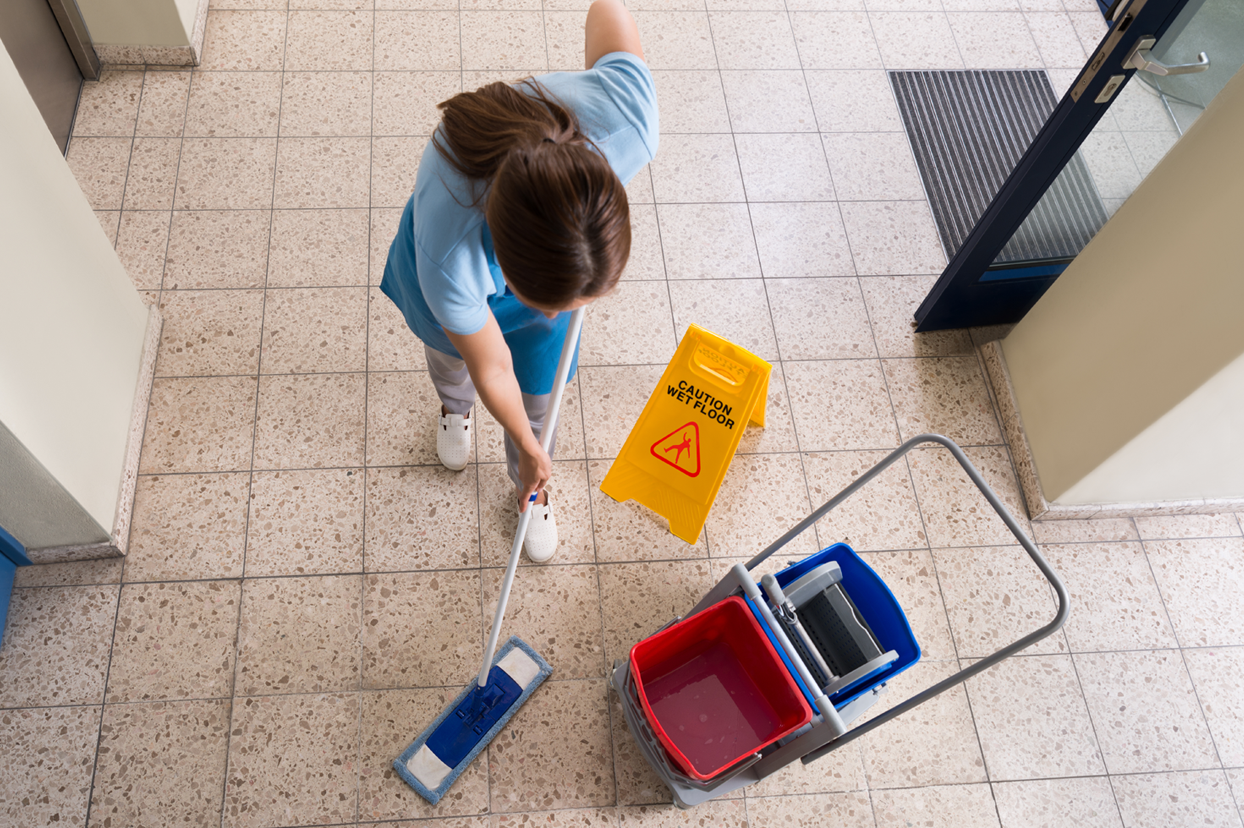
Slip incidents rarely happen because a floor is “bad.” They usually happen because moisture, soils, and traffic meet at the wrong moment—right after a mop pass, during a rainy-day rush, or when tracked-in grit turns smooth surfaces into a skating rink. That’s why slip and fall prevention floor care programs aren’t a single service. They’re a system: cleaning methods, products, schedules, signage, inspections, and staff habits that work together to keep traction high and surprises low.
If you manage an office, retail site, warehouse, clinic, or multi-tenant building, the goal is simple: protect people while keeping your floors looking sharp. The strategy is more nuanced—and it starts with understanding what “prevention” really means.
Why slip-and-fall prevention is a floor-care issue
A prevention-focused approach treats floors as a safety surface, not just a cosmetic one. That means every decision is made with traction in mind:
- Moisture control: spills, restroom splash zones, entryway rainwater, and over-wetting during cleaning
- Soil control: sand and grit that act like tiny ball bearings under shoes
- Residue control: leftover cleaner or finish that makes surfaces feel slick
- Traffic patterns: high-use corridors, elevator lobbies, breakrooms, and stair landings
OSHA’s walking-working surfaces guidance consistently emphasizes keeping floors clean and dry as a core housekeeping requirement—especially in high-risk settings.
The building blocks of slip and fall prevention floor care programs
A strong program is built from repeatable steps. Think “standard operating procedure,” not “best effort.”
1) Zone mapping that matches how people move
Start by dividing your facility into zones, because not all square footage carries equal risk:
- Entry/transition zones: sidewalks → lobbies → hallways
- Wet zones: restrooms, breakrooms, water stations, janitor closets
- High-traffic lanes: reception paths, conference corridors, elevator banks
- Task-heavy zones: shipping/receiving, copy rooms, service counters
This is also where you connect your program to an existing related article like High-Traffic Area Cleaning.
2) Moisture management before you mop
Most slip events don’t happen during deep cleaning—they happen during normal business hours. So the program should prioritize prevention tools that work while people are present:
- Absorbent entry mats with routine rotation and vacuuming
- Wet floor response kits placed near restrooms and breakrooms
- Spot-clean protocols that remove spills fast without spreading moisture
- “Dry time” rules (no reopening an area until it’s genuinely dry)
3) The right cleaning chemistry—used the right way
Overuse, wrong dilution, or incompatible products can leave residue that attracts soil and reduces traction. A prevention program standardizes:
- Exact dilution ratios (no guessing)
- Rinse requirements where needed
- Compatible products for your floor type (VCT, LVT, sealed concrete, tile/grout, terrazzo)
H4: Residue control is traction control
If your floor looks clean but feels “draggy” or “slick,” that’s often residue. A traction-focused program includes periodic neutralizing/rinse steps (especially in restrooms and around entrances) to keep surfaces clean and predictable underfoot.
4) Floor finish strategy that balances shine and safety
Some facilities chase shine. The smarter goal is durable protection + stable traction. Your program should define:
- Where finish is appropriate (and where it isn’t)
- Burnishing schedules that don’t over-polish traffic lanes
- Recoat cycles based on wear patterns, not the calendar
5) Scheduled floor care that prevents “surprise slickness”
A consistent cadence reduces emergencies and last-minute “wet floor” situations.
- Daily: spot response, restroom touch-ups, entry mat care
- Weekly: machine scrubbing in primary traffic lanes
- Monthly/quarterly: detail edges, reset trouble areas, recoat where needed
- Seasonal: rainy-season upgrades (extra matting, more frequent entry cleaning)
Training: the most overlooked safety investment
You can buy the best equipment and products—and still fail if the process isn’t trained. Effective slip and fall prevention floor care programs include clear training on:
- Proper mop wringing and “no over-wet floors” technique
- Using microfiber systems to reduce water use and improve soil pickup
- Color-coded tools to prevent cross-contamination (restrooms vs. offices)
- Spill response speed and documentation basics
- Safe signage placement (where it actually warns people)
And yes—signage matters. But in a prevention program, signs are the last layer, not the first plan.
Audits and accountability that don’t feel like micromanagement
A workable program uses light-touch checks that build consistency:
- Quick daily supervisor walkthroughs of wet zones and entrances
- Weekly floor condition notes (dull lanes, residue feel, mat saturation)
- Monthly trend review: where slips almost happened and why
- Simple reporting: what was cleaned, when, and what issues were found
If you want a credible external reference for setting safety expectations around floors, OSHA’s slips/trips/falls resource is a helpful starting point: OSHA slips/trips/falls guidance.
How to choose a vendor for slip-and-fall-focused floor care
When evaluating cleaning partners, look for operational signals—not marketing phrases. Ask:
- How do you control dry time in occupied spaces?
- What’s your plan for rainy days and tracked-in grit?
- How do you prevent chemical residue and overuse?
- Do you machine-scrub high traffic lanes on a schedule?
- What training do your teams receive on safety-first floor care?
A partner who understands prevention will talk about zones, traction, moisture control, and repeatable methods—because that’s what makes slip and fall prevention floor care programs actually work.
Ready to reduce slip risk without disrupting your business?
If you want safer floors, fewer complaints, and a cleaning plan that matches real foot traffic, we can help you build a program around your facility type and schedule.
Call (619) 938-2600 or email info@citywidecleaningservices.com to request a walkthrough and a customized floor care plan designed for prevention.
——
Meta Title (4–6 words):
Meta Description (100–140 characters):
Suggested Slug (Yoast-friendly):