cies make the plan manageable for supervisors and easier to compare across vendors.
Every Shift or Daily
- Remove accessible cardboard, plastic wrap, broken strapping, and general waste from designated collection points.
- Check walking routes, exits, and dock approaches for loose debris or spills.
- Sweep or vacuum approved traffic zones using equipment suited to the floor and dust type.
- Empty staff-area bins and clean restrooms and breakroom surfaces.
- Report damaged flooring, leaks, or suspicious residues rather than treating every substance as an ordinary spill.
Weekly Detail Work
- Scrub approved high-use concrete or coated floors when equipment traffic can be separated safely.
- Detail edges around guardrails, bollards, and accessible rack bases.
- Clean designated packing surfaces and accessible ledges after inventory is protected.
- Check entrance mats and waste-staging areas for recurring soil buildup.
Monthly or Scheduled Projects
Arrange deeper dust removal, hard-floor maintenance, or accessible overhead detailing where the site assessment supports it. High-level work, conveyor internals, electrical equipment, and hazardous-material cleanup require separate authorization, trained personnel, and appropriate controls—not an assumed janitorial task.
Floor Cleaning Without Disrupting Throughput
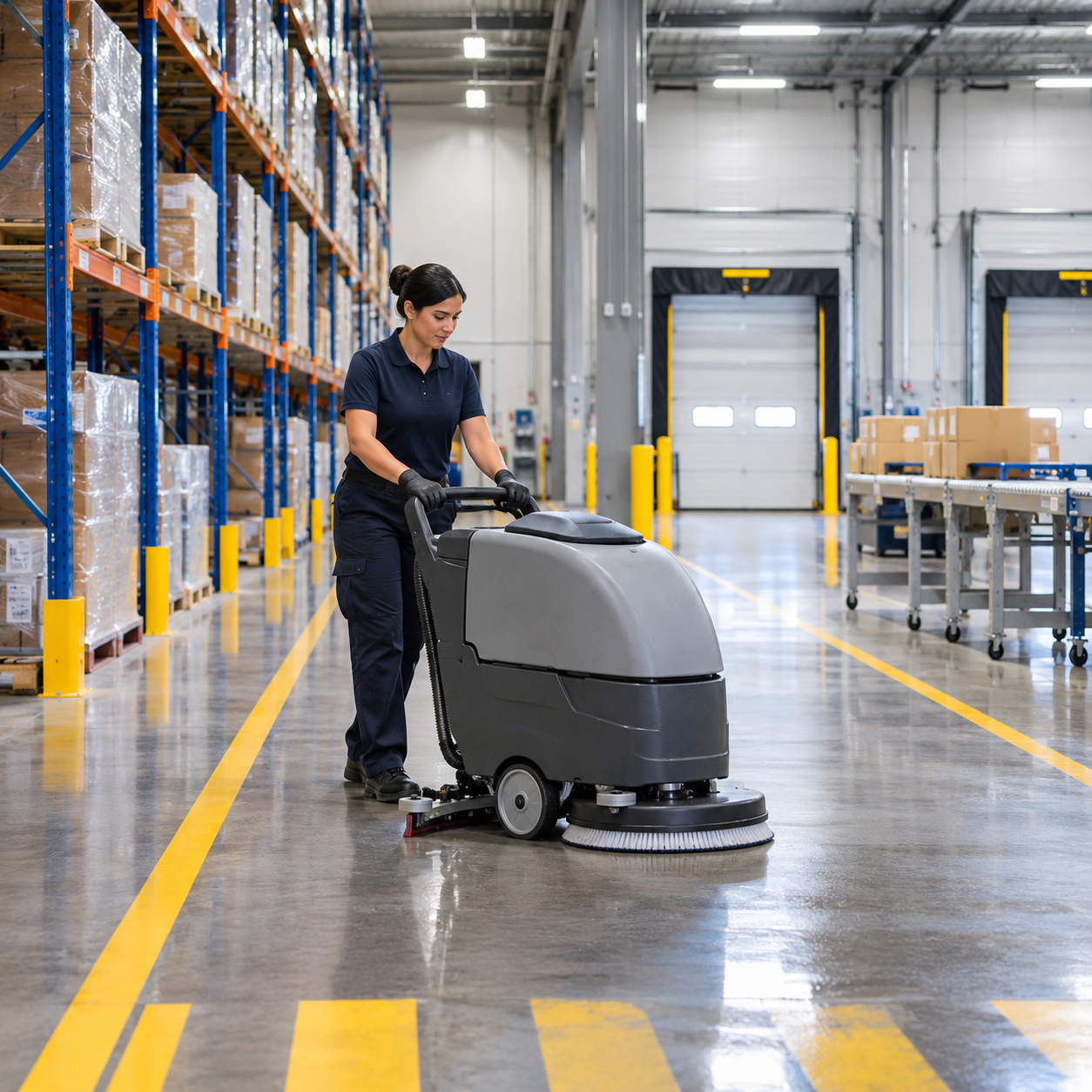
One poorly timed wet-cleaning pass can create a conflict between cleaning crews and powered industrial trucks. Build work windows around shift handovers, quieter aisles, or planned maintenance periods.
Start with dry debris removal, then use a suitable machine and chemistry for the surface. Avoid leaving standing water or detergent film. Block off treated sections until they are safe to reopen, and never leave equipment in an active travel lane.
For more on preventing settled particulate from returning to the floor, read our Warehouse Dust Control Solutions (internal link). That guide complements routine scrubbing with practical dust-control considerations.
Safety Rules That Belong in the Cleaning Scope
Cleanliness and safe operations overlap, but a cleaning contractor shouldn’t be expected to control warehouse hazards outside its training or authority.
The OSHA warehousing hazards and solutions guidance {https://www.osha.gov/warehousing/hazards-solutions} highlights keeping floors and aisles clear of clutter, cords, hoses, spills, and other slip or trip hazards. Use it to shape your housekeeping expectations—not as a claim that hiring a cleaner automatically makes a facility compliant.
Confirm These Boundaries Before Work Starts
- Who handles unknown liquid spills, chemicals, batteries, and damaged containers?
- Which forklift routes and dock doors must remain closed to cleaning staff?
- Who authorizes access to elevated areas or around operating conveyors?
- What PPE, signage, and equipment restrictions apply to each zone?
If the site stores food, pharmaceuticals, or temperature-sensitive inventory, document any additional sanitation requirements separately.
How to Measure Cleaning Quality Across Shifts
A signature on a completed checklist isn’t always evidence of a clean aisle. Inspections should check outcomes: accessible lanes free of loose debris, no visible residue on designated floor zones, clean employee facilities, and waste containers serviced on schedule.
Record the location, issue, corrective action, and responsible contact. Repeated dust in one pick lane may point to damaged packaging or a traffic pattern, not simply an inattentive cleaner.
What to Ask Before Comparing Quotes
Request the cleanable floor area, zone-by-zone frequencies, equipment specifications, access windows, waste-handling responsibilities, and separate prices for periodic projects. Clarify whether the contractor cleans during operating shifts or only after equipment stops. A low price without these details can hide major omissions.
Build a Cleaning Plan Around Your Distribution Schedule
Effective distribution center and logistics facility cleaning should support operations, not compete with them. City Wide Cleaning Services, headquartered in Santee, CA, provides commercial cleaning services, including floor cleaning and waste removal. For a warehouse or logistics site, the first step is discussing the facility’s surfaces, traffic, access restrictions, and tasks that fall within an appropriate service scope.
Ready to discuss your cleaning needs? Call (619) 938-2600 or email info@citywidecleaningservices.com to request a customized cleaning quote.