Keeping people moving safely through your building starts with spotless vertical and emergency pathways. Clear, consistent elevator and stairwell cleaning standards for offices protect health, support ADA accessibility, and shape the first impression tenants and visitors carry with them—before they even reach the lobby.
Why These Zones Demand Higher Standards
Elevators and stairwells are among the busiest, most touch-intense areas in any workplace. Buttons, rails, door edges, thresholds, kick plates, and call panels are touched hundreds (sometimes thousands) of times each day. Dust, skin oils, and biofilm accumulate quickly, and poor air circulation in cabs can trap odors. In the event of an emergency, debris on stair treads or landings can also become a safety hazard. That’s why elevator and stairwell cleaning standards for offices must go beyond “wipe and go” and align with documented, repeatable protocols.
A Risk-Based Framework That Works
A high-performing program starts with a risk assessment and standard operating procedures (SOPs). Map every touchpoint: floor buttons, cab walls, mirrors, handrails, ventilation grilles, thresholds, card readers, intercoms, and call stations on every floor. For stairwells, inventory treads, nosings, landings, doors, crash bars, and signage. Prioritize by contact frequency and soil load. Then set your cadence:
- High-touch (hourly to 4x/day): elevator buttons, rails, door edges, call panels
- Moderate-touch (daily): cab walls, mirrors, thresholds, floors, stair rails
- Low-touch (weekly/monthly): light fixtures, ventilation grilles, machine-room-adjacent surfaces (non-mechanical), signage
For evidence-based guidance on high-touch surface programs, see this CDC resource on Environmental Services.
Chemistry, Dwell Time, and Material Care
Not all surfaces are created equal. Stainless panels, powder-coated doors, etched glass, brushed aluminum, and rubber stair nosings each react differently to chemicals. Your elevator and stairwell cleaning standards for offices should specify:
- Cleaner/Disinfectant Selection: Use EPA-registered products appropriate for non-food, high-touch surfaces. Choose formulations that won’t haze glass or pit metals.
- Dwell Time: Disinfection requires that surfaces remain visibly wet for the label-listed contact time. Train teams to re-wet as needed.
- Residue Control: Follow with a neutral cleaner or microfiber buff to avoid sticky build-up on buttons and rails that attracts soil.
- Slip Resistance: On stair treads and landings, use neutral pH cleaners designed for traction; avoid film-forming agents that reduce coefficient of friction.
Elevator Cab Protocols (Daily, Day-Porter, and Nightly)
Daily opening:
- Inspect cab lighting; replace lamps promptly to prevent shadowing that hides soil.
- Microfiber damp-wipe all wall panels from top to bottom to pull down dust.
- Spot-clean mirrors and glass with lint-free microfiber; avoid ammonia near etching.
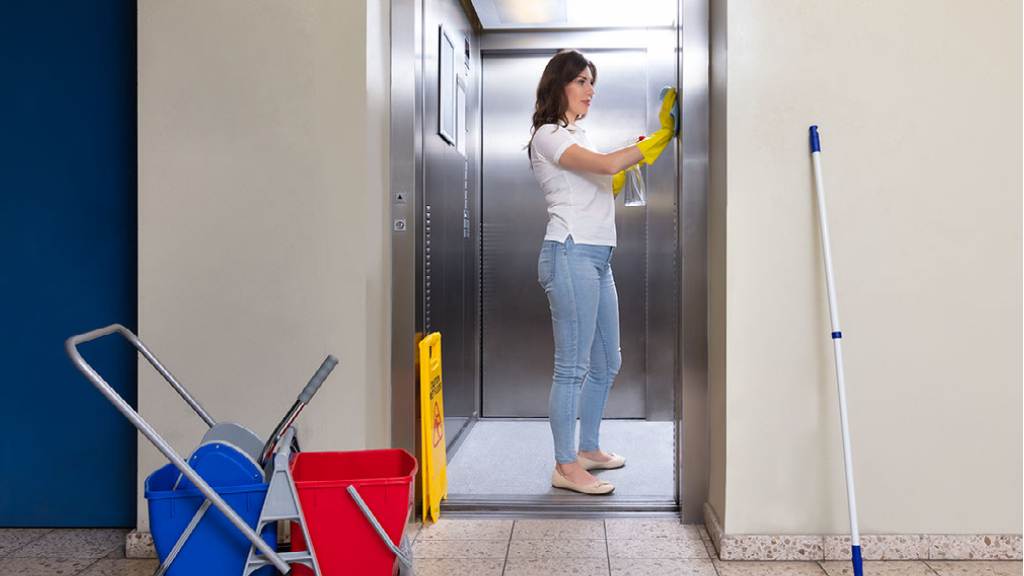
- Disinfect call panels, emergency intercoms, door edges, handrails, and floor buttons (inside and outside the cab).
- Vacuum cab flooring with a HEPA-filtered unit; auto-scrub or spot-extract as needed.
Day-porter cycles (pulse cleaning):
- Hit buttons, rails, and call panels on a fixed interval during peak traffic.
- Wipe thresholds and door sills to remove grit that causes track wear.
Nightly detail:
- Deep-clean floor surfaces (stone, LVT, rubber, or carpet tile) using the correct pad/brush.
- Polish stainless where specified, protecting adjacent buttons with a guard card to prevent seepage.
Stairwell Protocols (Safety + Cleanliness)
Stairwells are life-safety egress routes and must be both clean and unobstructed. Standards should include:
- Daily: Sweep from top landing down, then damp-mop with a neutral cleaner. Disinfect handrails, door hardware, crash bars, and call phones.
- Weekly: Edge vacuum treads and nosings; dust walls, ledges, and signage.
- Monthly/Quarterly: Machine scrub sealed concrete or rubber treads; inspect and remove any residue that could reduce traction.
For broader high-traffic corridor practices, see our guidance on High-Traffic Area Cleaning
Documentation, QA, and Compliance
Best-in-class elevator and stairwell cleaning standards for offices are verified—not assumed. Build in:
- Digital checklists with time-stamped tasks for button panels, thresholds, and rails.
- ATP hygiene monitoring (optional) on representative touchpoints to validate outcomes.
- Issue flags for scratched panels, loose thresholds, or flickering cab lights—so facilities can repair before tenant complaints arise.
- Seasonal adjustments (rainy days bring more grit; cold/flu season increases disinfection frequency).
Materials and Methods That Protect Surfaces
- Microfiber sequencing: Color-code cloths (e.g., blue for glass, yellow for metals, red for restrooms nearby) to prevent cross-contamination.
- Non-abrasive pads: Avoid scouring elevator metals; use approved stainless and glass care systems.
- Odor management: Use fragrance-free or low-VOC options; persistent odors usually stem from floor soils trapped in cab corners—address source, not symptom.
- Handrail hygiene: On stainless rails, apply disinfectant, observe dwell, then finish with a compatibility-checked protectant to reduce fingerprints without leaving slickness.
Tenant Experience and Brand Impact
Elevators are rolling brand statements. Smudged mirrors and grimy buttons tell a story tenants won’t forget. Clean cabs and dust-free stair rails communicate operational excellence, improve perceived safety, and reduce service tickets. That’s why our programs knit janitorial, facilities, and property management together into one measured standard.
Build Your Building-Specific Standard
Every property is different. A historic elevator cab, a high-rise with destination dispatch, or a campus with heavy stairwell use after hours—each demands tuned SOPs. We’ll conduct a walk-through, map touchpoints, right-size the schedule, and implement training so outcomes are consistent across day porters and night crews.
Ready to formalize your elevator and stairwell cleaning standards for offices? Call (619) 938-2600 or email info@citywidecleaningservices.com to request a site assessment and a custom SOP.