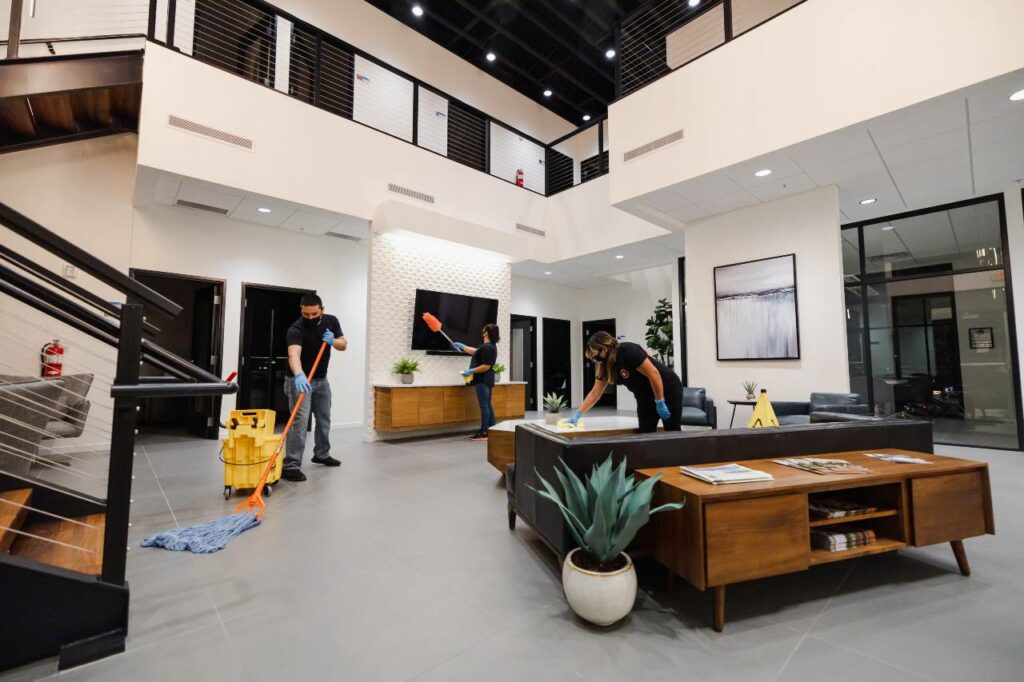
Open offices promise collaboration, agility, and flexible seating—but they also concentrate fingerprints, crumbs, and germs across shared surfaces. Crafting effective open-plan office cleaning strategies means aligning hygiene with how people actually use the space: touchdown benches in the morning, meeting tables after lunch, hot-desks all day, and phone booths between calls. Below is a practical, data-driven playbook you can apply immediately.
Map the Space by Behavior, Not Just Square Footage
Traditional checklists treat every workstation the same. In open plans, usage varies by hour and zone. Start with a brief walk study at peak and off-peak times. Identify:
- High-touch hubs: hot-desks, conference tables, phone booths, elevator buttons, coffee stations.
- Transit lines: corridors, elevator lobbies, and copy/print areas.
- Quiet zones: libraries, focus rooms, less-used benching.
Translate those observations into risk tiers and frequencies. Your open-plan office cleaning strategies should emphasize more frequent touchpoint passes in hubs, routine resets in transit lines, and scheduled, lower-frequency detailing in quiet zones.
Build a Day–Night Team Rhythm
A high-performing program blends visible day porters with an efficient after-hours crew.
Day Porter Focus (Visibility + Hygiene)
- Hourly touchpoint wipe-downs (desk edges, chair arms, conference controls, door hardware).
- Spot vacuuming and crumb patrol around collaboration tables.
- Restroom checks and consumables top-ups before breaks and right after lunch.
- Microfiber glass touch-ups on entry doors and divider panels.
After-Hours Crew (Productivity + Reset)
- Full vacuuming of open benching and corridors.
- Disinfection of shared keyboards/mice where applicable.
- Kitchen/breakroom appliance fronts, sink sanitizing, and floor mopping.
- Scheduled detail: high dusting, vent cleaning, and deep restroom sanitation.
This split ensures occupants see cleanliness during the day while heavy work is finished at night—critical to tenant satisfaction and quality scores.
Standardize Touchpoint Disinfection the Smart Way
Not all wipes and sprays are equal. Choose EPA-registered products validated for the organisms of concern, and train staff on contact time. Rotate cloth faces frequently to avoid cross-contamination. Use color-coded microfiber (e.g., red for restrooms, blue for general surfaces, green for food areas) so tools never “travel” into the wrong zone.
For authoritative guidance on choosing disinfectants and sequences, review CDC workplace cleaning guidance.
Hot-Desk Hygiene: From Policy to Practice
Hot-desking only works when the surface is guest-ready, every time.
- Self-service kits: Place caddies with disinfectant wipes and hand sanitizer at the end of each bench run.
- Visual cues: Small “Cleaned & Ready” tent cards help signal a reset; day porters can flip cards after quick wipes.
- Locker logic: Encourage personal items storage to keep worksurfaces clear for nightly cleaning.
- Weekly resets: Keyboard blow-outs, monitor dusting, and cable sanitizing keep technology feeling fresh.
Meeting Rooms: The Reputation Makers
A brilliant meeting can be derailed by smudgy touch panels or sticky table edges. Bake these into your open-plan office cleaning strategies:
- Between-meeting wipes: Add QR-code checklists so occupants can request a quick touchup if needed.
- End-of-day reset: Full table sanitizing, chair armrests, remotes/controllers, and push plates.
- Weekly deep clean: Under-table cable trays, chair bases, floor edges, and AV credenzas.
Kitchens, Breakrooms, and Coffee Points
People judge cleanliness the moment they see the sink. Institute:
- Timed cycles: Porter visits at 10:30 am, 12:45 pm, and 3:30 pm to catch peak usage.
- Appliance protocol: Handles, buttons, and door gaskets get priority; interiors scheduled weekly.
- Floor care: Grease-resistant mopping and walk-off mat maintenance to reduce tracking into open areas.
Elevators, Stairs, and Lobbies: First Impressions on Repeat
These are throughput zones; fingerprints return quickly.
- Micro-touch rounds: Short, frequent wipe cycles for button panels, railings, and door frames.
- Glass clarity: Quick squeegee passes; fingerprints are more noticeable in natural light.
- Matting program: Keep walk-off mats vacuumed and rotated to trap grit before it reaches hard floors.
Air and Floors: Two Levers That Change Everything
- HEPA filtration: Regular filter replacements and daytime proof of care (visible unit indicators) reassure occupants.
- Vacuuming cadence: High-traffic zones nightly; low-traffic zones on alternating schedules.
- Hard-floor health: Dust-mop first to remove grit, then autoscrub or damp-mop. Program periodic scrub-and-recoats to maintain slip resistance and shine.
QA That Actually Improves Outcomes
Quality assurance isn’t paperwork; it’s a feedback loop.
- Simple scoring: Pass/fail with photo evidence on hotspots (benches, phone booths, kitchen counters).
- Complaint trend logs: If crumbs reappear at 2 pm daily, shift a porter round to 1:45 pm.
- ATP/fluorescent gel checks: Monthly spot tests on touchpoints validate that training and contact times are working.
Sustainability Without Sacrificing Clean
Microfiber systems dramatically cut chemical and water usage while improving pickup. Dilution-control stations prevent over-concentrated solutions and streaking. Where feasible, adopt Green Seal or equivalent chemistries and pair them with measurable outcomes (e.g., fewer respiratory complaints, improved indoor air perception scores).
Staffing, Training, and Safety
Open environments expose technique. Train techs to move efficiently, coil cords neatly, and stage caddies out of traffic. Reinforce ergonomics (neutral wrist positions for wiping, proper bends for waste pulls) to reduce injury risk and absenteeism—quietly boosting consistency and morale.
Tie It All Together with Smart Scheduling
Use occupancy data (badges, Wi-Fi counts, or simple head checks) to set porter rounds and after-hours routes. Review monthly; adjust with seasons and hybrid schedules. That’s how open-plan office cleaning strategies stay relevant and cost-effective.
Connect Services That Support Open Plans
Expand your program with complementary solutions like Commercial Cleaning Services to standardize scope across lobbies, restrooms, and specialty areas as your space evolves.
Ready to elevate your open office?
We’ll design a zone-based plan, deploy trained teams, and stand up QA that you can see and measure.
Phone: (619) 938-2600
Email: info@citywidecleaningservices.com