Why touchpoints drive real risk—and results
Illness spread in offices rarely comes from drapes or ceilings; it comes from touchpoints employees share all day long. Door handles, elevator buttons, fridge pulls, faucet levers, copier panels, desk edges, conference-room tables, and handrails concentrate contact—and therefore risk. Building a defensible program means standardizing touchpoint disinfection protocols for offices so they’re targeted, time-bound, and measurable across every floor and shift.
Define your critical touchpoint inventory
Before you pick products, document the surfaces that matter most in your space. Walk each area and list:
- Entry & circulation: exterior/interior door hardware, badge readers, elevator call buttons, handrails.
- Work areas: shared desks, chair arms, drawer pulls, keyboards/mice for hoteling, phone handsets.
- Collaboration: conference tables, speakerphones, A/V controls, dry-erase markers/rails.
- Breakrooms & restrooms: refrigerator/freezer handles, microwaves, coffee dispensers, sink levers, stall latches, flush levers, paper-towel dispensers.
- Shared equipment: copier/printer touchscreens, shipping scales, pallet-jack handles in mixed office/warehouse environments.
Tag each item as high-touch / medium-touch and assign a frequency. This inventory becomes your service scope, routing map, and quality checklist.
Product selection that matches the job
Not all chemistries are created equal. For touchpoint disinfection protocols for offices, choose:
- EPA-registered disinfectants with organism claims aligned to your risk profile and compatible with your surfaces.
- Practical dwell (contact) times—30 seconds to 5 minutes is realistic for daytime cleaning.
- Materials compatibility (won’t cloud acrylic, pit metal, or soften vinyl).
- Delivery method suited to the task: pre-saturated wipes for electronics and small hardware; trigger sprayer + microfiber for larger hard, non-porous surfaces.
For authoritative guidance on when to clean vs. disinfect and the focus on high-touch surfaces, see CDC’s page on cleaning and disinfecting.
Build the cadence: frequency that fits traffic
Harmonize cadence with occupancy patterns:
- Daytime porter rounds: 2–4x cycles per day for lobbies, elevators, restrooms, breakrooms, and shared devices.
- Evening team reset: full touchpoint pass after close; pair with routine trash, dusting, and floor care.
- Event spikes: add pre-/post-meeting passes for large conferences, all-hands, and catered lunches.
Method matters: the five-step standard
- Pre-clean if visible soil is present.
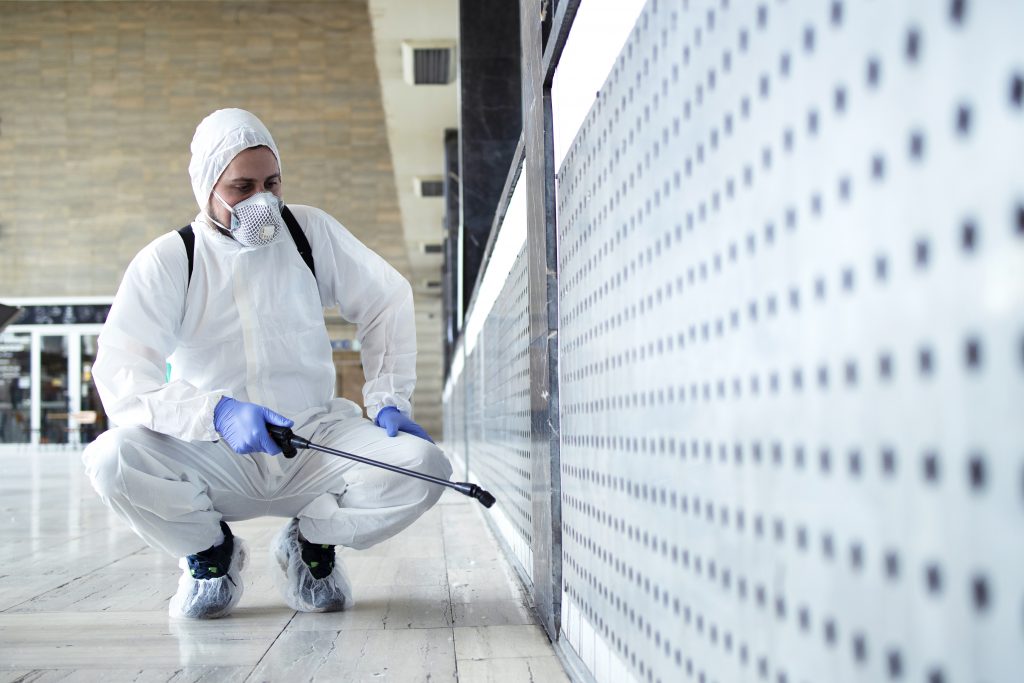
- Apply disinfectant to keep the surface wet for the full labeled dwell time.
- Respect dwell time—restart the clock if it dries early.
- Wipe with the right media (clean microfiber per color code).
- Post-dry/neutralize if the product requires it for food-adjacent or sensitive finishes.
Document these steps in your SOPs so every technician executes the same repeatable process.
Color-coding, cross-contamination, and route design
- Color-coded microfiber & tools (e.g., red for restrooms, blue for general, green for food/coffee zones) prevents cross-use.
- Top-to-bottom, clean-to-dirty flow: start with lobby and office touchpoints, end in restrooms.
- Route cards list each touchpoint in sequence to eliminate misses and variation between cleaners.
Electronics and delicate finishes
Many offices are now mostly screens and coated furniture. For touchpoint disinfection protocols for offices, specify:
- Electronics-safe wipes (alcohol-based, quick dwell, lint-free).
- Non-abrasive cloths and light pressure for coated surfaces.
- A test area protocol for new chemistries to protect finishes and warranties.
Improve the rest of your routine with our guide to Office Cleaning Best Practices.
Verification: make it visible and provable
Modern programs pair process with proof:
- Checklists with time stamps at floor, zone, and room level.
- ATP testing (where appropriate) for periodic validation of soil removal on high-risk touchpoints.
- QR code placards in lobbies or breakrooms that show today’s last disinfection round and how to request an extra pass.
- Issue logs for damaged surfaces or malfunctioning dispensers so facilities can remediate quickly.
Employee engagement: the 10-second assist
Encourage staff to support the program without turning them into cleaners:
- Provide personal desk kits (monitor wipe + hand sanitizer).
- Post simple “before/after meeting” reminders in conference rooms.
- Keep touch-free waste cans near microwaves and printers so wipes and towels don’t end up on counters.
Integrate with broader office hygiene
Touchpoint disinfection works best alongside:
- Hand hygiene access at entries, elevators, and collaboration zones.
- Ventilation verification and filter changeouts.
- Nightly floor care (mopping and vacuuming) to reduce overall bioburden.
- Routine deep cleans (e.g., quarterly descaling and grout restoration in restrooms) to keep daily work efficient.
Sample scope for a mid-size office (100 employees)
- Day Porter (2 cycles): AM arrivals + post-lunch. Lobbies, elevators, restrooms, breakroom handles, printers, doorknobs.
- Nightly Crew: Full touchpoint pass + floors + trash.
- Weekly Add-Ons: Keyboard/phone wipe-downs for hoteling stations; conference room tech panels.
- Monthly: Inside microwave/fridge handles detail; sanitizer dispenser checks.
- Quarterly: Restroom fixtures descaling; breakroom deep clean.
Why partner with City Wide Cleaning Services
We translate plans into outcomes: clear SOPs, EPA-registered products, trained porters, and transparent reporting. Our supervisors audit dwell times and surface compatibility so your touchpoint disinfection protocols for offices stay consistent—even when occupancy or layouts change. Need to align protocols across multiple San Diego locations? We’ll standardize routes, chemicals, and proof-of-service so your safety messaging is consistent company-wide.
Ready to tighten your touchpoint standards?
Call (619) 938-2600 or email info@citywidecleaningservices.com for a tailored onsite assessment and a detailed scope with frequencies, products, and QA.