Managing a multi-tenant office building means balancing different businesses, shared facilities, and constantly changing schedules. One tenant needs spotless conference rooms before morning meetings, another operates late into the evening, and everyone expects clean restrooms and welcoming common areas. That’s why multi-tenant office building janitorial services require more coordination than ordinary office cleaning.
A successful cleaning program must distinguish shared responsibilities from tenant-specific needs while maintaining consistent standards throughout the property. For San Diego property managers, the goal is straightforward: keep tenants satisfied, protect building finishes, and avoid unnecessary interruptions.
This guide explains how to organize cleaning schedules, define responsibilities, monitor quality, and choose a janitorial program that works across multiple office suites.
Why Multi-Tenant Buildings Need a Different Cleaning Strategy
Unlike single-occupant offices, multi-tenant properties accommodate businesses with different operating hours, visitor volumes, and cleanliness expectations.
A legal office may prioritize privacy and after-hours access, while a busy consulting firm might generate more traffic in shared meeting spaces.
Three Challenges Property Managers Face
-
Shared-space accountability: Establishing who maintains lobbies, elevators, corridors, and common restrooms.
-
Different operating schedules: Coordinating cleaning without disrupting employees, meetings, or visitors.
-
Consistent quality: Preventing one neglected area from affecting the entire building’s appearance.
Effective multi-tenant office building janitorial services address these challenges through clearly documented scopes rather than generic cleaning agreements.
What Should Multi-Tenant Janitorial Services Include?
A comprehensive program separates building-wide maintenance from work performed inside individual tenant suites.
Common Area Cleaning
Shared spaces create the first impression for visitors and prospective tenants.
Routine tasks typically include:
-
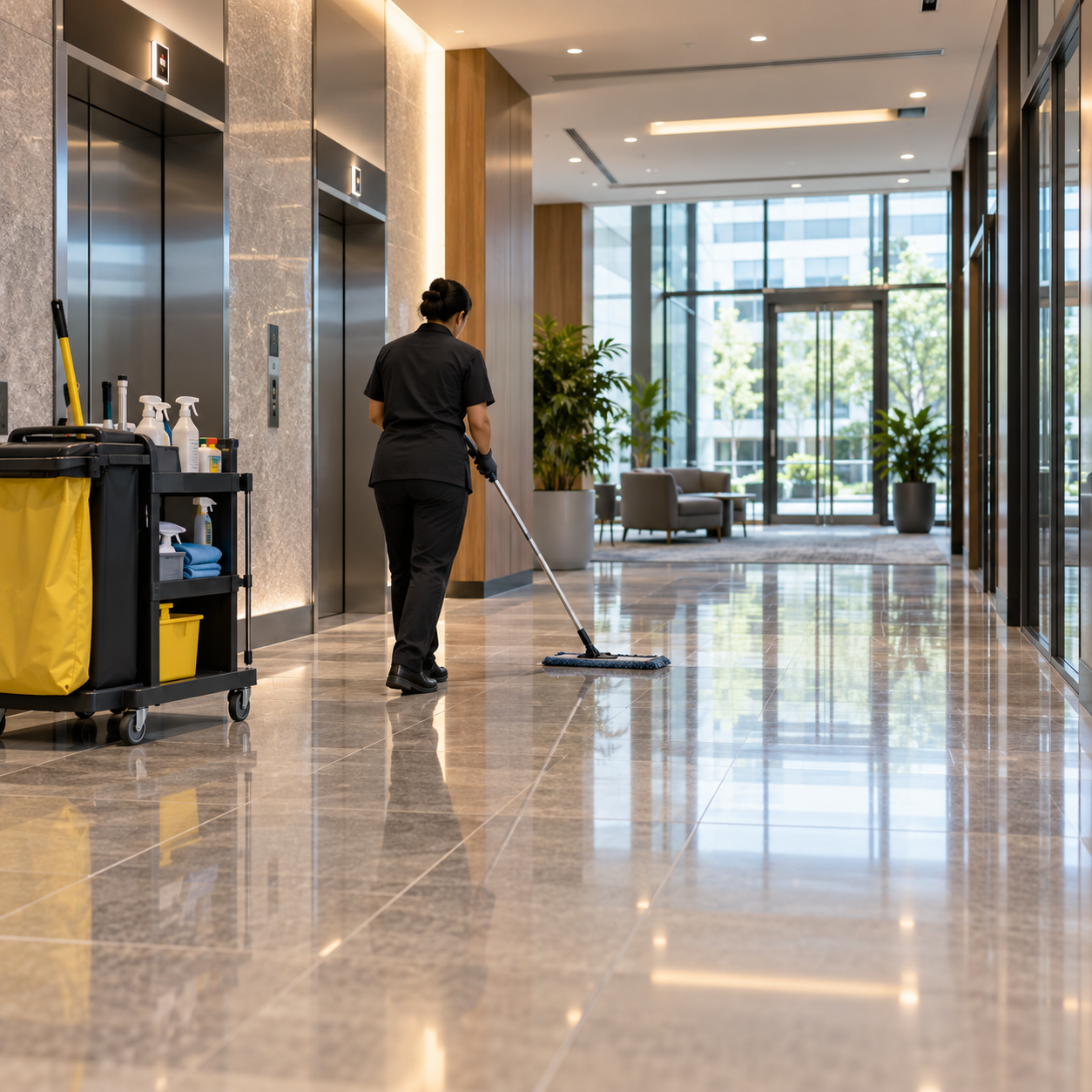
Vacuuming and mopping entrance floors and corridors
-
Cleaning elevator buttons, doors, and accessible surfaces
-
Removing fingerprints from lobby glass
-
Dusting reception furniture and reachable fixtures
-
Emptying shared waste containers
-
Cleaning stairwell handrails and accessible landings
Restrooms and Shared Amenities
Common restrooms, kitchens, lounges, and conference facilities often require more attention than private offices.
Cleaning priorities include fixtures, counters, mirrors, touchpoints, floors, and supply checks.
Frequency should reflect occupancy rather than assuming all shared facilities experience identical traffic.
Individual Tenant Suites
Cleaning responsibilities inside leased offices should follow the lease agreement and approved service scope.
Common tasks may include workstation-area vacuuming, accessible surface dusting, trash removal, and kitchenette cleaning.
Sensitive equipment, confidential documents, and restricted rooms should remain outside the cleaning scope unless specifically authorized.
Building a Cleaning Schedule Around Tenant Traffic
The best multi-tenant office building janitorial services use different cleaning frequencies for different zones.
Daily or Nightly Essentials
-
Maintain entrances, lobbies, and high-traffic corridors
-
Clean shared restrooms and check consumables
-
Empty common-area waste containers
-
Address fingerprints and visible debris
-
Service authorized tenant spaces according to their agreements
Weekly Detail Cleaning
-
Vacuum accessible floor edges and corners
-
Dust ledges, baseboards, and shared furniture
-
Spot-clean interior glass partitions
-
Detail elevator interiors and accessible stairwell surfaces
Monthly and Quarterly Maintenance
Periodic tasks may include carpet extraction, hard-floor machine scrubbing, detailed fixture cleaning, and upholstery maintenance.
These schedules should remain flexible when tenants move, occupancy increases, or special events affect building traffic.
After-Hours Cleaning Without Tenant Disruption
Scheduling becomes complicated when tenants have different operating hours.
A cleaning crew may enter one suite after 6 PM while another business remains open until midnight. Property managers must therefore coordinate access and communicate restrictions clearly.
Access and Security Checklist
Before service begins, confirm:
-
Authorized entry times for every tenant suite
-
Key, badge, and alarm procedures
-
Restricted areas and confidential workspaces
-
Elevator availability and cleaning-equipment storage
-
Procedures for reporting unlocked doors or unusual conditions
A written access plan protects tenant privacy and reduces unnecessary interruptions.
Quality Control That Keeps Every Tenant Satisfied
Cleaning consistency matters because complaints from multiple tenants can quickly overwhelm property management teams.
A strong janitorial program should include inspection checklists, defined service expectations, and a process for reporting and correcting problems.
What Should Inspections Measure?
-
Restroom cleanliness and supply availability
-
Lobby glass, flooring, and furniture appearance
-
Trash removal and recycling compliance
-
Corridor and elevator cleanliness
-
Completion of agreed tenant-specific tasks
For an industry benchmark, review the ISSA Cleaning Industry Management Standard