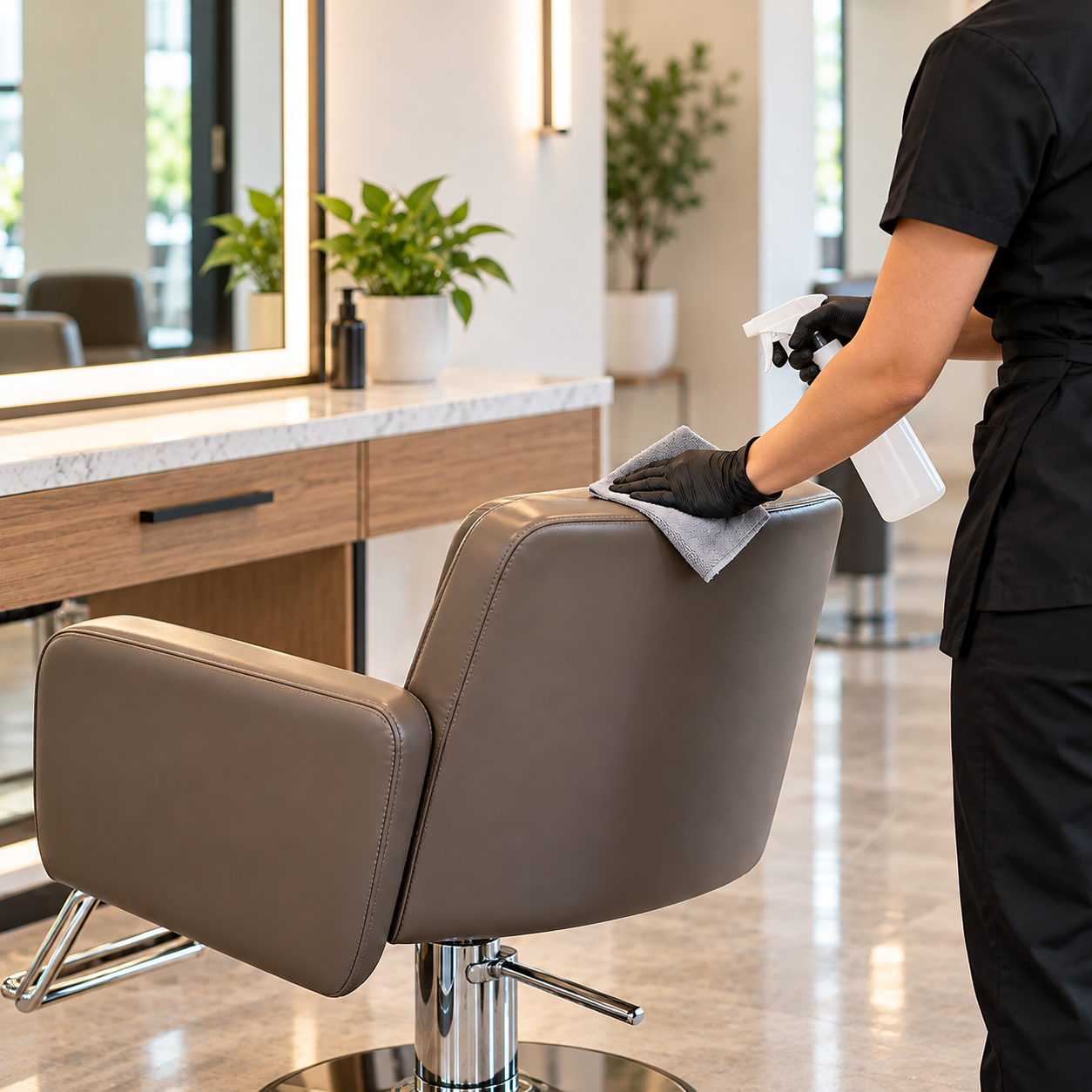
A beautiful spa can lose its appeal the moment a client notices a dusty treatment shelf, stained floor, or unpleasant restroom odor. In beauty and wellness businesses, cleanliness isn’t simply part of the presentation—it’s part of the service experience. Following proper spa and salon cleaning standards helps create welcoming spaces, supports hygiene, and keeps facilities ready for every appointment.
Whether you operate a hair salon, nail studio, skincare center, or day spa in San Diego, the cleaning challenges extend beyond ordinary office maintenance. Hair clippings, cosmetic residue, moisture, shared furniture, and constant client turnover all demand consistent attention.
This guide explains the essential cleaning practices, California sanitation requirements, and practical maintenance schedules that every spa or salon manager should understand.
Why Spa and Salon Cleaning Standards Matter
Beauty establishments combine personal services with high-contact environments. Treatment chairs, shampoo basins, manicure tables, and waiting areas may serve numerous customers during a single business day.
Without a structured cleaning routine, small maintenance problems quickly become visible.
Three Priorities Every Cleaning Program Should Address
-
Client confidence: Clean mirrors, furniture, floors, and restrooms communicate professionalism.
-
Hygiene: Appropriate cleaning and disinfection help control contamination risks associated with shared spaces.
-
Facility preservation: Removing product buildup, moisture, and abrasive debris helps protect furniture and flooring.
A successful program addresses both visible appearance and less obvious areas that accumulate dirt between appointments.
California Salon Sanitation Requirements: What Owners Should Know
California beauty establishments must comply with applicable regulations established by the California Board of Barbering and Cosmetology.
The Board’s Health and Safety Regulations